No membership fee required. No yearly fees. Only pay for what you want. Cancel anytime.
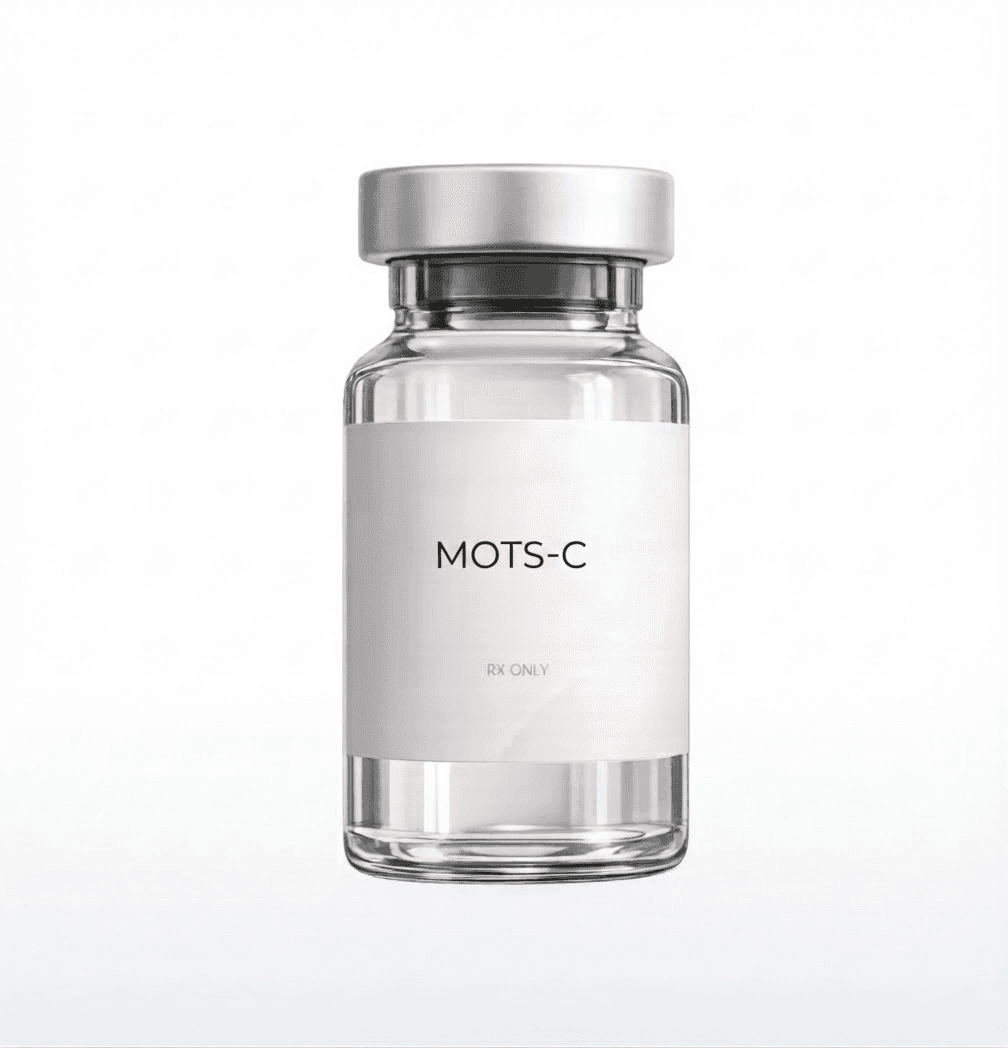
Apexion Health MOTS-C treatment vial
LONGEVITYMITOCHONDRIAL

MONTHLY SUPPLY · INJECTION

MOTS-C

TREATMENT

Mitochondrial-derived peptide that regulates metabolic flexibility, insulin sensitivity, and cellular energy homeostasis during aging.

SUPPORT

MOTS-C is a mitochondrial-derived peptide that encodes for a small protein involved in metabolic regulation. It has been shown to influence insulin sensitivity, metabolic flexibility, and energy homeostasis — particularly under conditions of metabolic stress or aging.

Shop Now

Lab-Tested · Physician-Supervised · Discreet Delivery

Apexion Health — LONGEVITY

MITOCHONDRIAL SIGNALING. METABOLIC RESILIENCE.

Unlike most peptides that are secreted by glands, MOTS-C is actually encoded within the mitochondrial genome and released into circulation under conditions of metabolic stress. It acts as a signaling molecule that communicates mitochondrial status to the nucleus, helping to regulate nuclear gene expression related to metabolism. This unique retrograde signaling pathway allows mitochondria to influence cellular metabolism in response to their own functional state.

Clinical Benefits

MOTS-C SUPPORTS YOUR HEALTH AT THE CELLULAR LEVEL

  1. 01.

    REGULATES METABOLIC FLEXIBILITY AND INSULIN SENSITIVITY

  2. 02.

    SUPPORTS CELLULAR ENERGY HOMEOSTASIS DURING METABOLIC STRESS

  3. 03.

    MODULATES NUCLEAR GENE EXPRESSION THROUGH MITOCHONDRIAL SIGNALING

  4. 04.

    ENHANCES RESILIENCE TO AGE-RELATED METABOLIC DECLINE

  5. 05.

    PHYSICIAN-SUPERVISED MITOCHONDRIAL-DERIVED PEPTIDE PROTOCOL

Shop Now

Clinical Evidence

How It Works in the Body

01 — Dose & Efficacy

Metabolic Regulation Profile

Insulin Sensitivity Enhanced glucose disposal55%
AMPK Activation Cellular energy sensor engaged60%
Fatty Acid Oxidation Shift toward fat metabolism50%

Lee et al., Cell Metab 2015; Kim et al., Nature Comms 2018

02 — Hormone Panel

Metabolic & Mitochondrial Markers

MarkerWithoutWith Treatment
Glucose Uptake (muscle)Rel.
Impaired (HFD/aging)
Insulin-stimulated ↑Enhanced
AMPK PhosphorylationRel.
Baseline
1.5–2.5× increaseActivated
Mitochondrial BiogenesisRel.
Declined with age
PGC-1α upregulatedStimulated
Metabolic FlexibilityRER
Rigid (glucose-dependent)
More flexible switchingImproved

MOTS-C: a mitochondrial-encoded signal that regulates nuclear metabolism genes

MOTS-C is a 16-amino acid peptide encoded in the mitochondrial 12S rRNA region. It translocates to the nucleus under metabolic stress and regulates adaptive nuclear gene expression — a unique retrograde signaling pathway. Discovery published in Cell Metabolism (Lee et al., 2015).

Lee et al., Cell Metab 2015; Kim et al., Nature Comms 2018; Reynolds et al., Aging Cell 2021

03 — Protocol

MOTS-C Metabolic Protocol

BaselinePre-treatment
  • ›Fasting glucose & insulin (HOMA-IR)
  • ›HbA1c & lipid panel
  • ›Body composition & weight
Metabolic ResetWeeks 1–8
  • ›MOTS-C SC injection per protocol (typically 3×/week)
  • ›Fasting glucose tracking weekly
  • ›Exercise & nutrition optimization
AssessmentWeek 8+
  • ›HOMA-IR & HbA1c at 8 weeks
  • ›Body composition comparison
  • ›Continue or cycle per protocol

Best studied for age-related metabolic inflexibility

Evidence strongest in models of diet-induced metabolic dysfunction where MOTS-C restores insulin sensitivity and prevents fat accumulation. Human data is emerging — most information from preclinical models. Typically used in 4–12 week cycles.

All protocols physician-supervised and adjusted per individual labs.