No membership fee required. No yearly fees. Only pay for what you want. Cancel anytime.
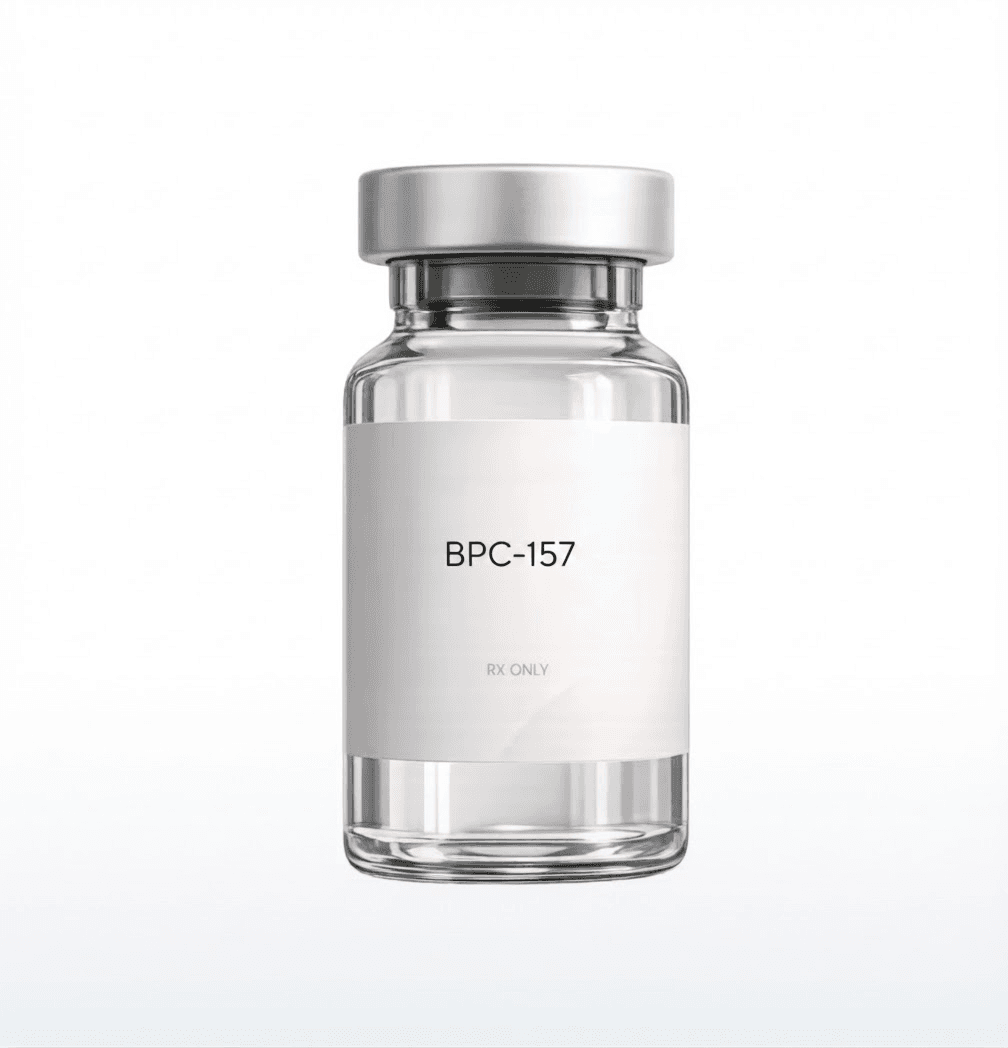
Apexion Health BPC-157 treatment vial
LONGEVITYPEPTIDE

MONTHLY SUPPLY · INJECTION

BPC-157

TREATMENT

Gastric pentadecapeptide that accelerates soft tissue healing, tendon repair, and gastrointestinal mucosal integrity.

SUPPORT

BPC-157 is a synthetic peptide derived from a protective protein found in the stomach. It promotes angiogenesis, collagen synthesis, and cellular repair mechanisms, making it effective for healing various tissues including muscles, tendons, ligaments, and the gastrointestinal tract.

Shop Now

Lab-Tested · Physician-Supervised · Discreet Delivery

Apexion Health — LONGEVITY

ACCELERATED HEALING FROM WITHIN.

BPC-157 (Body Protection Compound-157) is a 15-amino acid peptide derived from human gastric juice. Unlike many peptides that work through receptor signaling, BPC-157 appears to work by modulating growth factor production and nitric oxide systems. It has demonstrated remarkable healing effects on various tissues including skin, muscle, tendon, ligament, and bone. What makes BPC-157 particularly interesting is its stability in gastric juice, suggesting it evolved as a natural protective mechanism for the gastrointestinal tract.

Clinical Benefits

BPC-157 SUPPORTS YOUR HEALTH AT THE CELLULAR LEVEL

  1. 01.

    ACCELERATES SOFT TISSUE HEALING AND TENDON REPAIR

  2. 02.

    PROMOTES GASTROINTESTINAL MUCOSAL INTEGRITY

  3. 03.

    SUPPORTS ANGIOGENESIS AND BLOOD FLOW TO INJURED TISSUES

  4. 04.

    MODULATES INFLAMMATORY PATHWAYS FOR BALANCED HEALING

  5. 05.

    STIMULATES COLLAGEN SYNTHESIS FOR TISSUE STRENGTH

  6. 06.

    PHYSICIAN-SUPERVISED INJECTABLE PROTOCOL

Shop Now

Clinical Evidence

How It Works in the Body

01 — Dose & Efficacy

Tissue Healing Activity

Angiogenesis Enhanced vessel formation in injured tissue65%
Collagen Deposition Increased synthesis in fibroblasts70%
Tendon Healing Accelerated repair in preclinical models80%

Seiwerth et al., Curr Pharm Des 2018; Hsieh et al., J Orthop Res 2017

02 — Hormone Panel

Healing & Inflammatory Markers

MarkerWithoutWith Treatment
Tendon Load-to-Failure% of control
100
~160+60%
Wound Contraction (D10)%
28
~65+37
GI Ulcer IndexScore
High
Significantly ↓↓ (est.)
TNF-α (inflamed tissue)Rel.
Elevated
↓Suppressed

Extensive preclinical — limited human RCT data

BPC-157 has robust evidence in rodent models across tendon, ligament, muscle, bone, and GI tissue. Human data is limited to case reports and small series. No safety signals in published literature. Stable in gastric juice — oral and injectable routes both studied.

Seiwerth et al., Curr Pharm Des 2018; Gwyer et al., Int J Mol Sci 2019

03 — Protocol

BPC-157 Healing Protocol

AssessmentPre-treatment
  • ›Injury/tissue assessment
  • ›Baseline pain & function scores
  • ›Imaging if indicated
Active HealingWeeks 1–8
  • ›250–500 mcg SC daily or BID
  • ›Inject as close to injury site as practical
  • ›Weekly function & pain tracking
MaintenanceWeek 8+
  • ›Reassess tissue status at 8 weeks
  • ›Continue if healing incomplete
  • ›Taper frequency as function recovers

Preclinical evidence strongest for acute/subacute injury

Most compelling data from tendon and ligament injury models. Angiogenic effects suggest best results when dosed close to injury. Cycling protocols (5 days on, 2 off) commonly used in practice.

All protocols physician-supervised and adjusted per individual labs.